
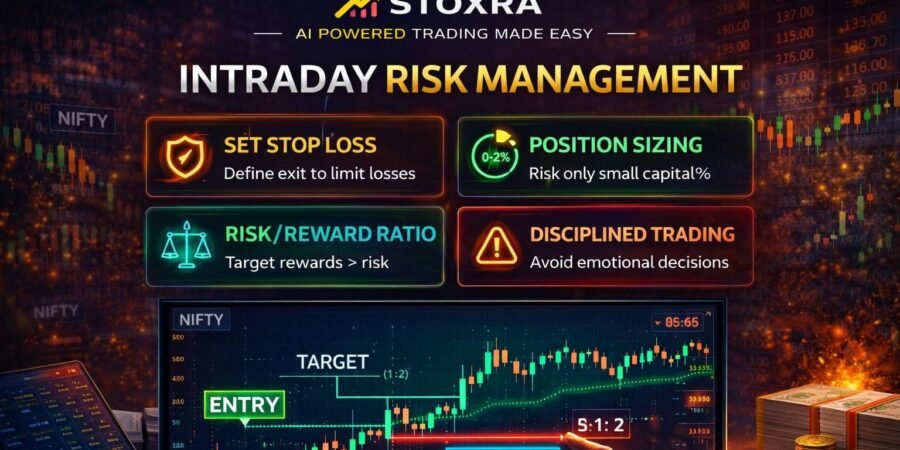
Introduction
One of the biggest mistakes new stock market traders make is focusing entirely on how much money they can earn while ignoring how much they could lose. They spend hours searching for profitable trading strategies, studying charts, and identifying potential opportunities, but often fail to establish a clear risk management plan.
This is where the 1% risk rule becomes useful.
The 1% risk rule is a popular risk management principle that encourages traders to limit the amount they plan to lose on a single trade to approximately 1% of their trading account equity. Instead of risking large amounts on individual trades, traders aim to preserve their capital and remain in the market long enough to develop their skills.
However, the 1% rule does not guarantee profits or prevent every loss. Its purpose is to help traders control their exposure and avoid allowing a single mistake to cause significant financial damage.
In this article, we will explain how the 1% risk rule works, how to calculate position sizes, and how to apply this principle to stock market trading.
1. What Is the 1% Risk Rule?
The 1% risk rule means that you plan to risk no more than 1% of your trading account equity on an individual trade.
For example, suppose you have a trading account worth $5,000. Under the 1% rule, your planned risk per trade would be:
$5,000 × 1% = $50
This means you would structure the trade so that the planned loss, if your stop-loss executes at its intended price, is approximately $50 or less.
It does not mean that you should invest only 1% of your account in every stock. Your position size can be significantly larger because the amount invested and the amount at risk are two different things.
For example, you might purchase $1,000 worth of a stock while risking only $50 if your planned stop-loss is sufficiently close to your entry price.
The distinction between position size and risk is essential for understanding proper risk management.
2. Why Is Risk Management More Important Than You Think?
Every trading strategy experiences losing trades. Even experienced traders cannot predict market movements with complete accuracy.
Without risk management, a short series of losses can significantly reduce your account balance.
Consider a trader who risks 10% of their remaining account balance on every losing trade.
After five consecutive losses, the account would retain approximately 59% of its original value. The trader would have lost around 41% of the account.
Now consider a trader who risks 1% of the remaining account balance on each trade. After five consecutive losses, approximately 95.1% of the original account would remain, assuming each planned loss is exactly 1% of the current balance.
This comparison illustrates why controlling individual losses matters.
Large losses also require disproportionately large gains to recover. A 20% decline requires a 25% gain on the remaining balance just to return to the starting point. A 50% decline requires a 100% gain.
Risk management cannot eliminate losing trades, but it can help reduce the damage they cause.
3. How to Calculate Your Risk Per Trade
Before entering a trade, determine how much of your account you are willing to risk.
The basic formula is:
Risk per trade = Account equity × Risk percentage
Suppose your trading account contains $10,000 and you choose to risk 1% per trade.
Your planned risk is:
$10,000 × 0.01 = $100
You should now identify a suitable entry price and stop-loss level. The distance between these prices determines how much you could lose per share if the stop-loss executes as intended.
For example:
- Account equity: $10,000
- Risk percentage: 1%
- Planned risk: $100
- Entry price: $50
- Stop-loss price: $48
- Risk per share: $2
Your position size would be:
Position size = Planned risk ÷ Risk per share
$100 ÷ $2 = 50 shares
You could therefore purchase 50 shares, representing a $2,500 position, while planning to risk $100 if the stop-loss executes at $48.
This calculation excludes transaction costs, taxes, slippage, and price gaps. In real trading, your actual loss may exceed the planned amount.
You should also ensure that the position fits your account’s available buying power and any applicable trading restrictions.
4. How to Choose the Right Stop-Loss Level
A stop-loss is an order or instruction intended to close a position when the price reaches a specified level. It can help traders manage downside risk, but it does not guarantee an exit at that exact price.
The stop-loss level should be determined by your trading strategy and the point at which the trade idea would no longer be valid.
For example, if you are buying a stock based on a support zone, you might place your stop below the zone if a break below it would invalidate your setup.
If you are trading a breakout, you might use a level that indicates the price has returned into the previous trading range.
However, placing a stop-loss too close to the entry price may cause you to exit during ordinary price fluctuations. Placing it too far away may increase the risk per share and require a smaller position.
The correct approach is to identify a technically meaningful stop-loss level first, then calculate your position size.
Avoid choosing an arbitrary stop-loss merely to justify purchasing more shares.
5. How the 1% Rule Works in Different Market Conditions
The stock market does not always behave in the same way. Price volatility, liquidity, and market conditions can influence how you apply the 1% rule.
During High Volatility
When a stock experiences large price movements, a suitable stop-loss may need to be placed farther from the entry price.
Because the risk per share increases, the position size should generally decrease if you want to maintain the same planned monetary risk.
For example, if your planned risk is $100 and your stop-loss distance increases from $1 to $2 per share, your position size decreases from 100 shares to 50 shares.
During Low Volatility
When price movements are relatively small, a technically appropriate stop-loss may be closer to the entry price. This could allow a larger position under the same risk limit.
However, low volatility does not automatically mean that a trade is safe. Sudden news, earnings announcements, or unexpected market developments can quickly change conditions.
During Earnings Announcements
Stocks can open significantly above or below their previous closing prices following earnings announcements. This is known as a price gap.
A stop-loss may execute at a worse price than expected if the market moves sharply through the specified level.
Traders should account for this possibility when deciding whether to hold positions through major announcements.
6. Common Mistakes When Applying the 1% Rule
Although the principle is straightforward, traders can still make mistakes when implementing it.
Confusing investment size with risk: Investing 1% of your account in a stock does not necessarily mean you are risking 1%. Your planned risk depends on your entry price, stop-loss distance, and position size.
Ignoring correlated positions: Opening several trades in companies exposed to the same industry or market trend can create concentrated risk. Each position may appear small individually, but their combined losses could be substantial.
Moving stop-losses farther away: Widening a stop-loss to avoid realizing a loss can undermine your original risk management plan.
Ignoring transaction costs: Brokerage fees, spreads, taxes, and slippage can reduce returns and increase actual losses.
Assuming every loss will stay within 1%: Gaps, trading halts, liquidity problems, and execution delays can cause actual losses to exceed the planned amount.
Increasing risk after winning trades: A series of profitable trades does not guarantee that the next trade will succeed. Maintain consistent rules instead of becoming overconfident.
Recognizing these mistakes can help you apply the rule more effectively.
7. Is the 1% Risk Rule Suitable for Every Trader?
The 1% risk rule is a guideline, not a universal requirement.
Some traders choose a lower risk percentage, particularly when they are learning, trading volatile stocks, or operating under strict risk limits. Others use different limits depending on their strategy, account size, and financial circumstances.
The appropriate level of risk depends on several factors, including your trading experience, strategy performance, financial objectives, and ability to tolerate losses.
For beginners, starting with smaller positions and practicing through a demo account can be a sensible way to develop consistency before risking real money.
You should also consider total portfolio exposure. Even if each trade follows the 1% rule, several simultaneous positions can create a much larger combined risk.
The goal is not to follow a number blindly. It is to establish a risk management framework that helps protect your capital and supports disciplined decision-making.
Conclusion
The 1% risk rule is a simple but valuable concept for stock market traders. By limiting planned losses relative to account equity, traders can reduce the impact of individual losing trades and avoid exposing too much capital to a single opportunity.
The key is to calculate risk before entering a trade, identify an appropriate stop-loss level, and adjust position size accordingly. Traders should also account for volatility, transaction costs, correlated positions, and the possibility that actual losses may exceed their plans.
Remember, successful trading is not just about finding winning trades. It is also about managing losing trades in a way that allows you to continue learning and improving.
Want to build a stronger foundation in trading? Explore our trading courses to learn position sizing, technical analysis, price action, and practical risk management strategies. Develop a structured trading plan and learn how to approach the stock market with greater discipline.
Disclaimer: This article is for educational purposes only and does not constitute financial or investment advice. Trading involves risk, and you may lose some or all of your invested capital. Stop-loss orders do not guarantee execution at the specified price, particularly during periods of high volatility.
